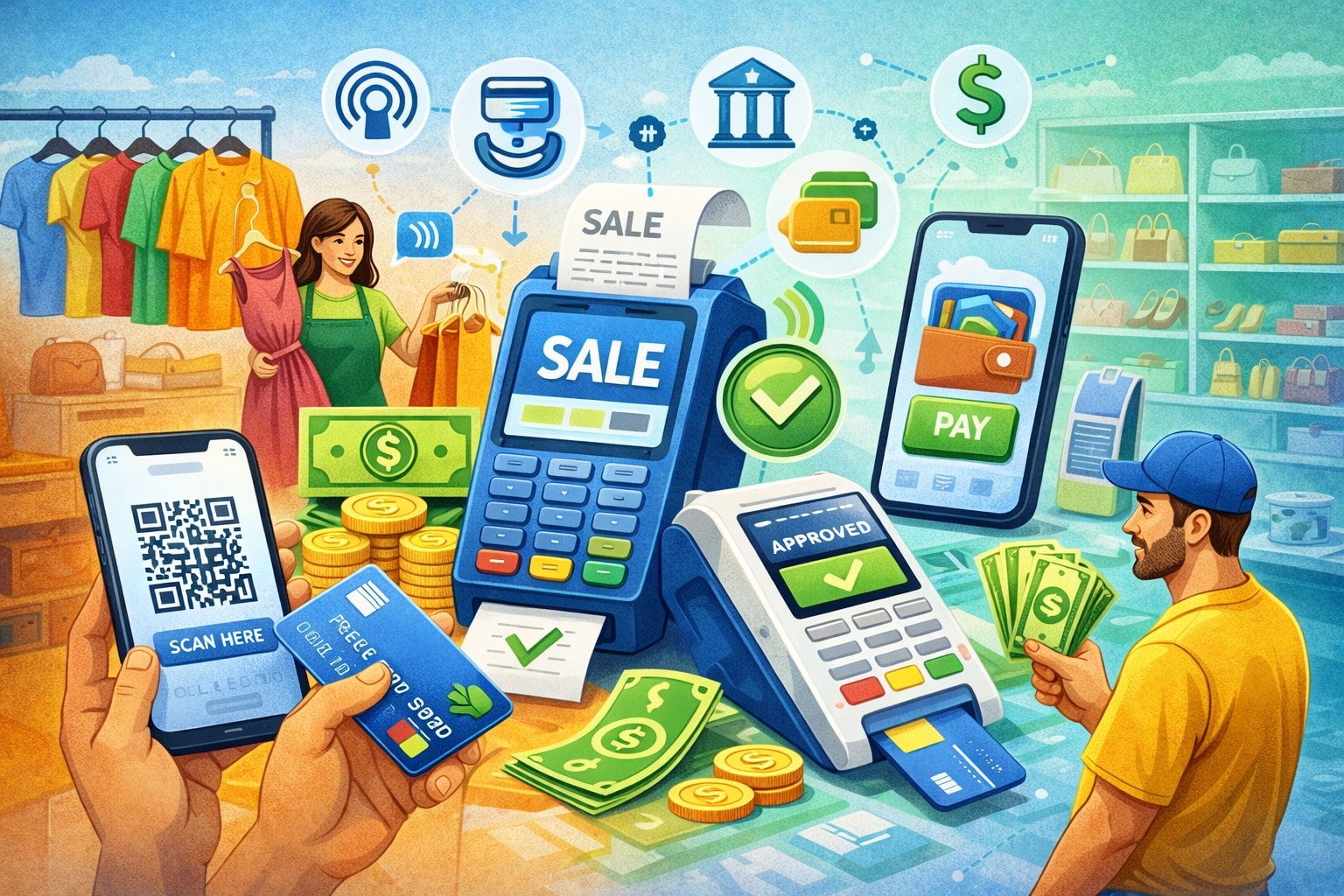
Running a consignment store is different from running a traditional retail shop, and your payment setup has to match that reality. You’re not just taking payments—you’re tracking item-level ownership, splitting proceeds with consignors, managing returns, handling taxes correctly, and reconciling deposits with payouts.
The right payment processing options for consignment shops can reduce disputes, speed up checkout, improve cash flow, and make your back office calmer.
In this guide, you’ll learn how consignment shop payment processing works, the best payment processing options for consignment shops (in-store, online, mobile, and invoicing), what to look for in a processor and POS, how pricing models impact margins, and what the future of consignment shop payment processing is likely to look like.
Throughout the article, you’ll also see practical tips to keep your payment processing options for consignment shops compliant, secure, and scalable.
Understanding how consignment changes payment processing
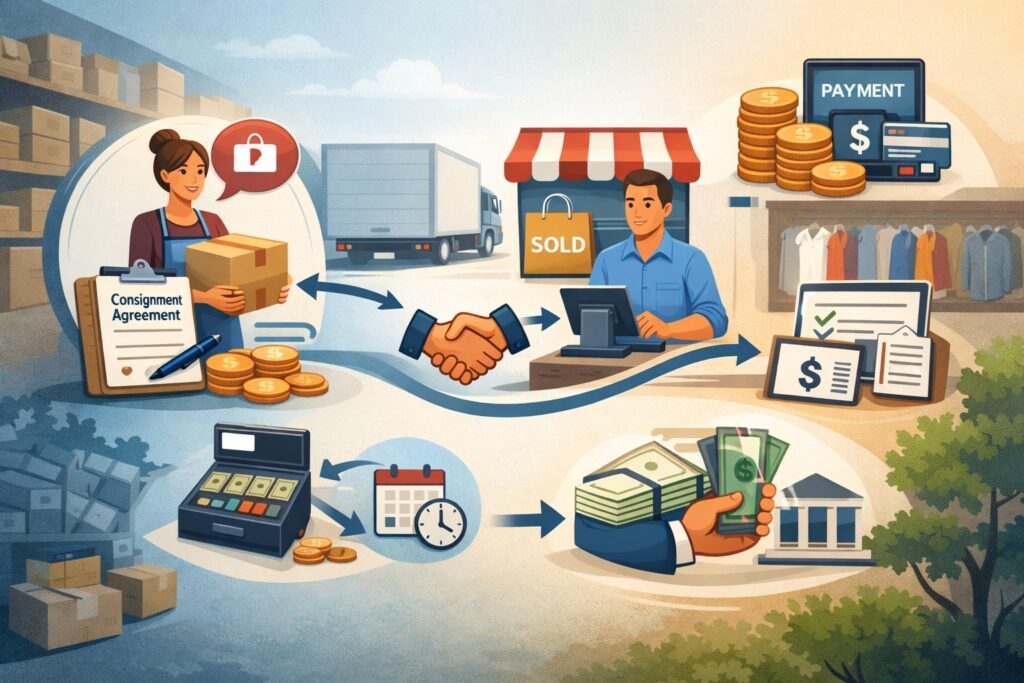
Consignment retail has a “multi-party money flow.” A customer pays you, you keep your commission, and later you pay the consignor the rest (often after a holding period). That creates three operational demands that standard retail payment processing doesn’t always handle well:
First, item-level tracking and ownership. A consignment SKU isn’t just a SKU—it’s tied to a consignor, a contract, a payout rate, and sometimes a time-based markdown schedule. Your consignment shop payment processing must connect sales data to consignor records so that payouts are accurate and defensible.
Second, returns and chargebacks. If you accept card payments and a buyer disputes a charge, you need documentation: receipt, refund policy, proof of delivery (for online orders), and item condition notes.
In consignment, disputes can also involve the consignor (“Why was my item discounted?”). Strong payment processing options for consignment shops include detailed receipts, clear policy printing, and centralized reporting.
Third, settlement timing and cash flow. Card payments settle on a schedule (often 1–3 business days), while consignor payouts might be weekly, biweekly, or monthly. If your processor holds funds or your payout schedule is too aggressive, cash flow tightens.
The best payment processing options for consignment shops help you forecast deposits and automate payouts without overextending your operating cash.
Core payment processing options for consignment shops
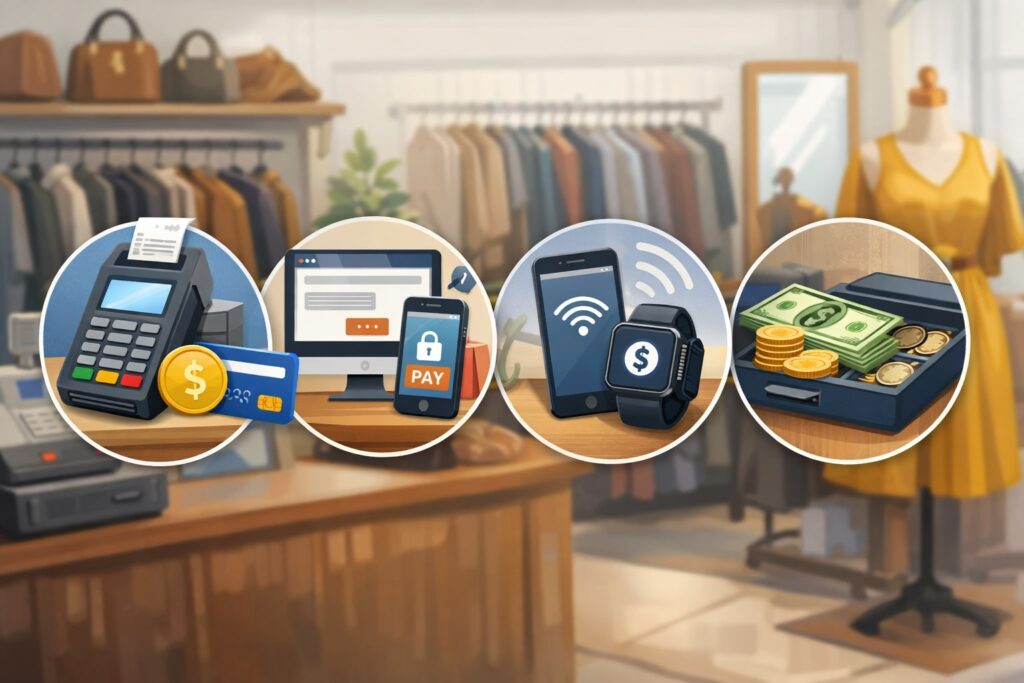
Most consignment stores succeed with a mix of payment types rather than a single method. The optimal mix depends on your inventory (apparel, luxury, home décor, instruments, collectibles), your customer demographic, and how much of your revenue is in-store vs. online.
A modern stack of payment processing options for consignment shops typically includes:
- Card-present processing for in-store checkout (chip, tap, swipe)
- Digital wallets (tap-to-pay, mobile wallets) to speed lines and increase conversion
- Card-not-present processing for invoices, phone orders, and online sales
- ACH/bank transfer for larger tickets, vendor payouts, or special orders
- Stored customer profiles (when appropriate) for repeat buyers and layaways
- Gift cards and store credit systems tied to your POS
- Optional: BNPL for higher average tickets
The key is to keep reporting unified. If you accept payments from multiple places (register, website, pop-ups, Instagram DMs), you want one dashboard—or at least one reconciliation routine—so you don’t lose time chasing mismatched settlements. The right consignment shop payment processing stack is the one you can manage consistently.
In-store card processing: terminals, countertop systems, and tap-to-pay
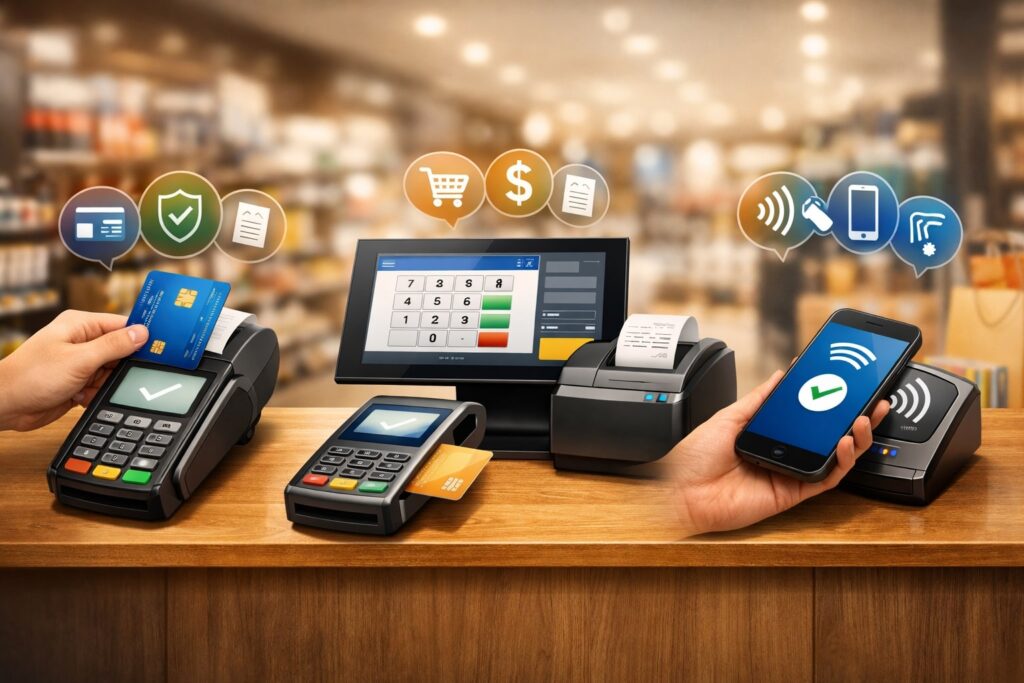
For physical locations, card-present transactions are the backbone of consignment shop payment processing. Your in-store payment setup should prioritize reliability, speed, and accurate receipts—because your front counter is where customer experience and dispute prevention happen.
Countertop terminals are simple and sturdy. They’re great if your store has one main checkout station and you don’t need deep inventory features on the terminal itself.
However, countertop terminals can become limiting if you need complex consignment reporting or flexible discounting rules. In that case, the terminal is just the “payment device,” and the real brain is your POS.
Integrated POS + terminal setups are usually the best payment processing options for consignment shops. Integration means the register sends the sale amount to the terminal automatically, reducing keying errors and speeding checkout.
It also keeps tender types, refunds, and end-of-day totals cleaner. With consignment, fewer mistakes matter because a small error can ripple into consignor payouts and monthly statements.
Tap-to-pay and contactless is no longer optional for many stores. It reduces checkout time and feels modern. It can also reduce wear-and-tear compared to swipes. If you sell higher-value items, contactless can increase customer confidence (they keep control of their card).
What to prioritize for in-store consignment shop payment processing:
- Fast approvals and stable connectivity (Wi-Fi + backup)
- Clear printed or digital receipts with item detail
- Easy refunds and partial refunds
- Shift controls and permissions (reduces internal errors)
- End-of-day reporting that matches deposits
POS systems built for consignment: what matters most
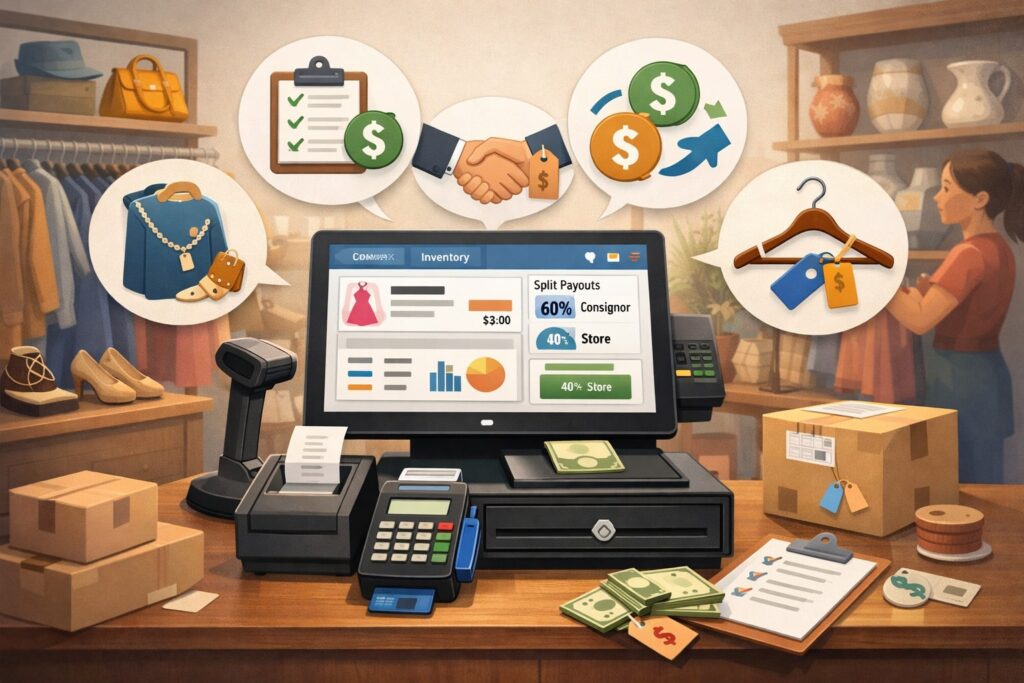
A POS can make or break payment processing options for consignment shops because “consignment” isn’t just a pricing model—it’s a workflow. A true consignment-ready POS should connect sales, inventory, and payouts without requiring spreadsheets for everything.
Key consignment POS features that strengthen consignment shop payment processing:
- Consignor profiles and contracts: You want fields for commission rates, payout preferences, tax handling where applicable, and item acceptance rules. When you ring up a sale, the POS should already know how the payout is calculated.
- Item intake workflows: Intake is where data quality starts. The POS should let you tag items with condition notes, brand, size, category, and photos. If you sell online, photo capture and listing tools matter.
- Automated payout reports: A POS that generates consignor statements (and tracks what’s been paid) reduces disputes. This is a major advantage of choosing integrated payment processing options for consignment shops rather than piecing tools together.
- Markdown schedules: Many consignment shops reduce price after set periods (e.g., 30/60/90 days). Your POS should automate that so staff isn’t guessing and customers aren’t arguing at checkout.
- Store credit and gift cards: Consignment stores often use store credit for returns or promotions. Your system should track credit cleanly and prevent accidental cash-outs.
Even if you already have a “retail POS,” confirm whether its consignment features are real or simply “vendor accounts.” True consignment shop payment processing depends on item-level payout logic, not just generic supplier tracking.
Online and omnichannel payments for consignment shops
If you sell online—even a little—your payment processing options for consignment shops must handle card-not-present transactions safely and efficiently. Online consignment introduces new issues: shipping, fraud risk, order cancellations, and customer expectations for fast refunds.
Hosted checkout and payment links are a great starting point. If you don’t have a full eCommerce site, you can still take payments using secure checkout links from your processor or POS. This keeps you out of the business of handling sensitive card data directly and reduces fraud exposure.
Full eCommerce integration is best when online sales are meaningful. You want inventory sync so you don’t sell the same one-of-a-kind item twice. For consignment, this is critical. The best consignment shop payment processing setups use a single inventory source of truth, with automatic stock updates when an item sells in-store or online.
Omnichannel reporting is where many shops struggle. Online payments settle separately from in-store payments, and fees can differ. If you want clean books, look for unified reporting or build a strict reconciliation routine.
Fraud prevention is also more important online. Strong payment processing options for consignment shops include:
- Address verification and CVV checks (where supported)
- Risk scoring and velocity rules (limits on repeated attempts)
- Manual review workflows for high-ticket orders
- Clear shipping confirmation and tracking storage
If you sell luxury, collectibles, or premium brands, expect more fraud attempts than basic apparel. Your payment processor’s risk tools can protect you without killing conversion.
ACH and bank transfer options for large-ticket or special situations
ACH (bank transfer) can be a smart addition to consignment shop payment processing, especially for higher-ticket items like furniture, instruments, jewelry, or bulk purchases. ACH typically has lower processing costs than cards, but it comes with tradeoffs in speed and customer familiarity.
ACH works well when:
- A buyer is comfortable paying from their bank account
- The item is expensive and card fees would be painful
- You’re doing a special order, layaway, or invoice
- You’re collecting deposits for a hold
However, ACH isn’t always “instant,” and returns or disputes follow different processes than card chargebacks. That means your policies must be crystal clear. If you accept ACH, train staff on how to explain payment timing and confirmation.
ACH can also be used for consignor payouts, but be careful: payouts are not the same as accepting customer payments. If you plan to pay consignors via bank transfer, you need accurate banking details, strong verification steps, and a consistent payout schedule.
Many shops prefer printed checks or digital payouts through their accounting system, but ACH payouts can save time at scale.
In a balanced set of payment processing options for consignment shops, ACH is not a replacement for cards—it’s a strategic tool for the right transactions, helping you protect margins on big sales while giving customers a trusted alternative.
Mobile payments for pop-ups, events, and multi-location intake
Consignment stores often expand beyond the storefront: pop-up events, community markets, remote intake appointments, or multi-location buying/acceptance. Mobile options make your business flexible and can drive more inventory intake and sales.
Mobile card readers paired with a phone/tablet are common. They’re easy to deploy and affordable. The biggest risk is weak connectivity, which can cause delays or force staff into offline modes.
If you use mobile as part of consignment shop payment processing, build a connectivity plan: strong data coverage, backup hotspots, and a clear process for what to do if a transaction fails.
Tap-to-pay on phones is growing as a convenient option. It reduces hardware needs and can speed setup at temporary locations. For consignment, the advantage is quick sales without a full register.
Mobile matters for intake, too. If your workflow includes paying consignors for outright buys (some hybrid shops do), mobile payout options must be handled carefully—keeping receipts, recording IDs if needed by your policy, and maintaining documentation for audit trails.
The best payment processing options for consignment shops treat mobile not as a backup, but as a planned channel with:
- Itemized receipts
- Inventory sync (so intake and sales match)
- Staff permissions
- End-of-day settlement tracking
Pricing models and fees: what consignment shops must watch
Margins in consignment can be excellent, but fees can still quietly eat profits if you don’t match your pricing model to your sales mix. Understanding fee structures is essential to choosing payment processing options for consignment shops.
Common pricing models include:
- Flat-rate pricing: Simple and predictable, often attractive for low volume. But it may be expensive if your average ticket is high or if you do a lot of debit transactions where cost-based pricing could be better.
- Interchange-plus: More transparent: you pay interchange (set by card networks) plus a processor markup. For many established consignment stores, interchange-plus can reduce total processing cost, especially with healthy volume and a good debit mix.
- Tiered pricing: Often confusing and less transparent. A transaction can “downgrade” into a higher-cost tier due to how it was entered or settled. Consignment shop payment processing can suffer under tiered plans if staff sometimes keys in cards, uses phone orders, or batches late.
Also watch for “hidden” costs:
- Monthly minimums and statement fees
- PCI or compliance fees
- Chargeback fees
- Device rental fees
- Gateway or eCommerce platform fees
- Batch fees or authorization fees
Because consignment includes payout management, you should also consider how processor settlement timing affects cash flow. The cheapest rate on paper isn’t always the best if it creates funding holds or poor reporting. The best payment processing options for consignment shops balance cost, transparency, and operational control.
Risk, underwriting, and avoiding account holds
Most consignment shops are not inherently “high risk,” but certain patterns can trigger risk reviews: high average tickets, sudden spikes in volume, large keyed-in transactions, and frequent returns. When a processor flags risk, you might face delayed deposits or requests for documentation—painful when you have consignor payouts due.
To keep consignment shop payment processing stable, focus on risk hygiene:
- Keep documentation organized: Save signed consignment agreements, refund policy acknowledgments (even a posted policy photo can help), shipping proofs for online orders, and customer communications. Dispute defense is easier when records are consistent.
- Reduce keyed-in transactions: Keyed-in payments tend to have higher fraud and higher fees. Use secure payment links, invoice tools, or customer-present transactions when possible.
- Manage refunds smartly: Excessive refunds can look like business instability. Have clear rules: time windows, condition requirements, and how store credit is handled.
- Avoid sudden volume swings: If you expect a big sales event or a viral online moment, notify your processor in advance when possible. Sudden spikes can trigger holds automatically.
- Train staff on policies: Most chargebacks begin as confusion. If your receipt clearly shows return terms and staff repeats them, disputes drop.
Stable payment processing options for consignment shops aren’t just about hardware—they’re about predictable processes that look trustworthy to banks and card networks.
Security and compliance basics for consignment payments
You don’t need to be a security expert, but you do need solid fundamentals. Consignment shop payment processing touches sensitive data, and mistakes can be expensive.
Key practices:
- Use EMV and contactless for in-store: This reduces counterfeit card fraud and shifts liability away from merchants in many cases when used properly.
- Avoid storing card data yourself: Let your POS or processor handle tokenization and stored profiles. Never write card numbers on paper, in notes apps, or in spreadsheets.
- Keep devices updated: POS tablets, terminals, and computers should get regular updates. Outdated systems can create vulnerabilities.
- Use role-based access: Cashiers don’t need access to refunds over a certain amount or to edit payout rates. Permissions reduce internal fraud and honest mistakes.
- Secure Wi-Fi and networks: Use a separate network for business devices, strong passwords, and a firewall where practical.
Compliance programs can feel annoying, but they’re part of modern payment processing options for consignment shops. Strong compliance reduces breach risk, builds customer trust, and keeps your ability to accept cards uninterrupted.
How to choose the best payment processing options for consignment shops
Choosing the right consignment shop payment processing setup is a structured decision. If you evaluate options in the right order, you’ll avoid expensive switching later.
Start with your reality:
- In-store only, or omnichannel?
- Average ticket size and monthly volume?
- Percentage of refunds/returns?
- Do you need advanced consignor payout statements?
- Do you do pop-ups or remote intake?
Then evaluate providers on these criteria:
- Consignment-ready POS features: If the POS can’t handle consignor splits and statements, you’ll be stuck in manual work. For many stores, POS capability matters more than chasing the lowest rate.
- Transparent pricing and contract terms: Look for clarity on rates, monthly fees, and cancellation. Understand settlement timing and whether holds are common for your profile.
- Integration quality: Integrated payments reduce errors and save time. If the POS and processor blame each other when issues happen, you’ll waste hours.
- Support responsiveness: Checkout problems happen at the worst times. Support quality is part of your true cost.
- Scalability: If you plan to add a second location, expand eCommerce, or grow intake volume, choose payment processing options for consignment shops that can grow with you.
This approach makes your decision defensible: you’re not picking “a terminal,” you’re choosing an operating system for how money moves through your consignment store.
Future prediction: where consignment payment processing is heading
The next few years will likely reshape payment processing options for consignment shops in several practical ways.
- More unified commerce: POS and online systems are moving toward “single inventory + single customer profile.” For consignment, that means fewer double-sells, better buyer history, and smoother returns across channels.
- Faster settlement and smarter cash flow tools: Many merchants want quicker access to funds. Expect more instant or same-day funding options, but also expect tighter risk controls. Consignment shops with clean documentation and stable sales patterns will benefit most.
- AI-assisted fraud and dispute handling: Fraud tools are getting better at spotting suspicious patterns without blocking good customers. We’ll also see more automated chargeback response packaging—pulling receipts, tracking, and policies into a dispute file faster.
- More alternative payments at checkout: Digital wallets will keep growing, and BNPL-like options may become more embedded in POS systems. Consignment shops selling higher-ticket items will use these tools to boost conversion—if fees and return policies are managed carefully.
- Better payout automation: Consignor statements and payouts will become more automated and more customizable—weekly micro-payouts for some, monthly consolidated payouts for others—without manual spreadsheets.
The best strategy is to choose payment processing options for consignment shops that are modular: strong POS foundation, clean reporting, and the ability to add channels without breaking reconciliation.
FAQs
Q.1: What are the best payment processing options for consignment shops with both in-store and online sales?
Answer: The best payment processing options for consignment shops with omnichannel sales combine an integrated POS (for item-level consignment tracking) with an online checkout that syncs inventory.
You want one system that updates stock when an item sells anywhere and produces consistent reporting for deposits, refunds, and consignor payouts.
For consignment shop payment processing, inventory sync is not a “nice to have”—it prevents double-selling one-of-a-kind items and reduces refund headaches. Look for unified dashboards, consistent fee reporting, and strong dispute tools for online orders.
Q.2: Can consignment shops use ACH instead of cards to reduce fees?
Answer: ACH can reduce costs for specific transactions, especially large-ticket sales, invoices, or deposits. But ACH typically shouldn’t replace card acceptance because many customers prefer cards and digital wallets.
The strongest payment processing options for consignment shops use ACH selectively: high-value items, repeat buyers, or situations where fees would significantly reduce margins. For consignment shop payment processing, make sure ACH policies are clear, especially around timing, returns, and confirmation.
Q.3: How do consignment shops handle chargebacks and disputes?
Answer: Dispute prevention starts at checkout: itemized receipts, clear refund policies, and consistent documentation. For online sales, keep shipping proofs and customer communication records.
Strong payment processing options for consignment shops also include tools for quick refund handling and reporting that ties transactions to specific items.
Consignment shop payment processing is easier to defend when you can show item detail, condition notes, and policy acknowledgment. Lowering chargebacks also protects your account from holds.
Q.4: Do consignment shops need a special POS system?
Answer: If you want clean payout statements, automated splits, and fewer disputes with consignors, a consignment-ready POS is strongly recommended.
Standard retail POS systems can process payments, but they often lack real consignment logic like consignor contracts, intake workflows, markdown schedules, and statement generation. Since payment processing options for consignment shops are tightly linked to payout accuracy, the POS matters as much as the processor.
Q.5: What fees should consignment shops pay the most?
Answer: Beyond the transaction rate, watch monthly fees, gateway fees for online payments, chargeback fees, device rental fees, and refund-related costs. Also watch for pricing models that cause “downgrades” when cards are keyed-in or batches are delayed.
The best payment processing options for consignment shops are transparent and predictable, because predictability helps you plan consignor payouts and manage cash flow.
Conclusion
The best payment processing options for consignment shops aren’t just about accepting cards—they’re about controlling how money moves through a multi-party retail model.
When your consignment shop payment processing is set up correctly, checkout becomes faster, reporting becomes clearer, consignor statements become easier, and disputes become rarer.
Focus on an integrated POS that truly supports consignment workflows, pair it with reliable in-store card acceptance and modern digital wallet support, and add online/ACH/mobile channels based on your business needs.
Keep pricing transparent, train staff on policies, and maintain clean documentation to reduce risk and prevent funding disruptions.
As technology evolves, consignment retailers will benefit from more unified commerce platforms, smarter fraud tools, and more automated payout features.
If you choose flexible payment processing options for consignment shops today—ones that can grow with new channels and better settlement tools—you’ll be positioned to scale inventory, improve customer experience, and keep consignors happy without drowning in manual reconciliation.