
Consignment inventory tracking is one of the most important parts of running a reliable resale, thrift, boutique, or consignment business. Unlike traditional retail, consignment stores are not simply buying products, placing them on shelves, and keeping all sales revenue.
They are managing items owned by many different consignors, each with their own agreements, prices, sales activity, commissions, return terms, and payout expectations.
When tracking is weak, small errors become expensive. A missing tag can cause a payout dispute. A vague item description can lead to the wrong consignor being credited. A delayed status update can make staff think an item is available when it has already sold.
Over time, these issues affect accuracy, consignor trust, customer service, shrinkage prevention, pricing decisions, reporting, and daily store operations.
Strong consignment inventory management gives store owners better control from the moment an item is received until it is sold, returned, donated, expired, or paid out. It also helps staff answer important questions quickly: Who owns this item? What is the price? Has it been discounted? When did it sell? Is the consignor owed money? Where is the item now?
The goal is not just to count inventory. The goal is to create a dependable system that connects each item to the right consignor, sale, commission, payout, and status. That is what makes consignment inventory tracking so valuable.
What Is Consignment Inventory Tracking?
Consignment inventory tracking is the process of recording, monitoring, and updating items that a store receives from consignors. It covers every stage of the item’s journey: intake, pricing, tagging, display, sale, discounting, return, expiration, donation, payout, and reporting.
In a regular retail store, inventory tracking often focuses on stock counts, reorder points, and product availability. In a consignment store, tracking must go deeper.
Each item is connected to a specific consignor, agreement, commission rate, payout rule, and item status. That means a consignment store inventory system must answer both inventory questions and financial questions.
For example, if a jacket sells, the store needs to know:
- Which consignor brought in the jacket
- What the original price was
- Whether a markdown applied
- What commission split was agreed upon
- Whether the item is eligible for payout
- Whether the payout has already been processed
- Whether the sale was later returned or adjusted
This is why consignment sales tracking and payout tracking should be connected. If sales data is separated from consignor inventory records, staff may spend hours matching receipts, tags, spreadsheets, and payout notes.
Effective consignment stock tracking also supports better decision-making. Store owners can see which categories sell fastest, which consignors bring profitable items, which products sit too long, and which markdown policies improve sell-through. These insights help stores price better, accept better inventory, and keep displays fresh.
For stores moving away from manual methods, resources about tracking consignor inventory and sales can help clarify how modern tools connect intake, sales, reporting, and payouts.
Why Consignment Inventory Management Is Different

Consignment inventory management is different because the store usually does not own the merchandise. The consignor retains ownership until the item sells or until the agreement says otherwise. This changes how inventory must be recorded, priced, discounted, reported, and settled.
In traditional retail, the store buys inventory from a supplier, sets prices, sells items, and keeps the revenue after costs. In consignment, the store acts as a selling partner. The final sale must be split according to a commission structure, and the consignor must be paid accurately. That makes consignor inventory records essential.
Another difference is item uniqueness. Many resale and consignment shops handle one-of-a-kind items. Two dresses may share the same brand and size, but they may have different consignors, conditions, prices, expiration dates, and commission splits. Tracking only by category or product type is not enough.
Consignment also requires careful handling of pricing rules. Some stores allow staff to set prices. Others let consignors suggest prices. Some use scheduled markdowns after a certain number of days. Others require approval before discounting. If these rules are not documented, disagreements can happen quickly.
Return windows and expired inventory also add complexity. If an item does not sell within the agreed period, the store may return it to the consignor, donate it, discount it, or transfer it to clearance. The correct action depends on the agreement, not staff memory.
Payout tracking is another major difference. A sale is not complete operationally until the consignor’s share has been calculated, approved, and paid. If a return happens after payout, the store may also need a process for adjustments.
Because of these moving parts, consignment inventory best practices should focus on traceability. Every item should have a clear path from intake to final resolution.
Key Consignment Inventory Best Practices
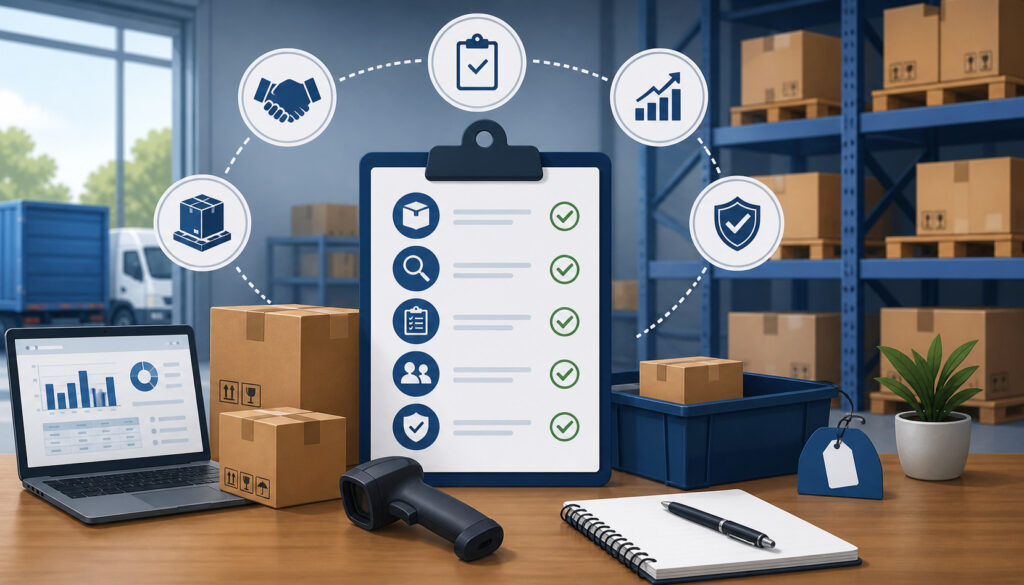
The best consignment inventory best practices combine clear policies, item-level records, consistent staff workflows, and reliable reporting. A store does not need to be large to benefit from structure. Even a small shop can avoid disputes and save time by standardizing how items are accepted, tagged, tracked, sold, and paid out.
The most effective systems usually share a few habits. They start with written consignor agreements. They create unique item records during intake. They use barcode inventory tracking or scannable labels where possible.
They update item status consistently. They reconcile physical inventory against system records. They communicate payout information clearly.
Here is a practical overview:
| Best Practice | What It Helps With | Why It Matters |
| Written consignor agreements | Terms, expectations, disputes | Prevents confusion about pricing, commissions, markdowns, and returns |
| Unique item IDs or barcodes | Item accuracy, checkout, payouts | Connects each item to the correct consignor and sale |
| Detailed item descriptions | Search, display, dispute resolution | Helps staff identify items quickly and accurately |
| Status tracking | Workflow control | Shows whether an item is received, active, sold, expired, returned, donated, or paid out |
| Clear pricing rules | Sell-through, fairness | Keeps markdowns consistent and easier to explain |
| Regular inventory reconciliation | Shrinkage, missing items, record accuracy | Finds discrepancies before they become major problems |
| Payout reports | Consignor trust, accounting | Helps stores pay accurately and maintain transparent records |
| Staff permissions | Loss prevention, accountability | Limits who can edit prices, delete items, or process payouts |
These best practices work together. A barcode helps at checkout, but it is only useful if the item record is accurate. A payout report is valuable, but only if sales and returns are recorded properly. A written agreement is helpful, but only if staff follow it consistently.
Create Clear Consignor Agreements
Clear consignor agreements are the foundation of accurate consignment inventory tracking. Before any item enters the sales floor, both the store and the consignor should understand the rules. A verbal explanation is not enough because commission rates, payout schedules, markdown policies, and return terms can be misunderstood over time.
A good agreement should explain the commission split, when payouts are issued, which items are accepted, how pricing is determined, and whether the store can discount items without additional approval. It should also clarify what happens to unsold inventory after the consignment period ends.
Important agreement details include:
- Commission rates or tiered splits
- Payout timing and method
- Accepted and restricted item categories
- Pricing authority
- Markdown schedule
- Return or pickup window
- Expired inventory handling
- Donation or disposal terms
- Fees, if any
- Returned sale adjustments
These policies protect both sides. The consignor knows what to expect, and the store has written terms to follow when questions arise. This is especially important when items are high value, seasonal, fragile, or difficult to authenticate.
Use Unique Item IDs or Barcodes
Unique item IDs are one of the most important parts of consignment stock tracking. Every item should have its own identifier, even if several items are similar. This identifier connects the item to the consignor, price, category, status, sale, and payout.
Barcode inventory tracking makes this process faster and more reliable. Instead of manually entering item numbers at checkout, staff can scan the barcode and pull up the exact item record. This reduces typing errors, prevents wrong-item sales, and helps ensure the correct consignor receives credit.
A strong item label may include:
- Barcode or QR code
- Item ID
- Price
- Short description
- Category
- Size or key attribute
- Intake date
- Optional consignor code
Barcodes are especially useful for stores with fast-moving inventory, multiple employees, online listings, or frequent markdowns. They also help during audits because staff can scan items on the floor and compare physical inventory against system records.
The main rule is consistency. If some items are labeled and others are not, staff may create workarounds. Workarounds often lead to inaccurate sales tracking and payout errors.
Track Item Status From Intake to Payout
Consignment inventory tracking works best when every item has a current status. Status tracking helps staff understand where an item is in the process and what action should happen next.
Common item statuses include:
- Received
- Pending review
- Priced
- Active
- On hold
- Discounted
- Sold
- Returned by customer
- Expired
- Returned to consignor
- Donated
- Lost or damaged
- Paid out
These statuses create a clear operational trail. For example, an item may be received but not yet active because it still needs cleaning, authentication, pricing, or photography. Another item may be sold but not yet paid out because the payout cycle has not closed.
Status tracking also supports consignment reporting. Store owners can review aging inventory, unsold items, expired items, payout-ready sales, and items requiring follow-up. Without status visibility, staff may waste time searching racks, checking handwritten notes, or asking coworkers what happened.
For more detailed inventory workflow ideas, the guide on how inventory management works in consignment POS software explains how intake, item records, sales, and settlements can connect in one process.
How to Set Up a Consignment Inventory Tracking System

Setting up a consignment inventory tracking system requires more than choosing a spreadsheet or software platform. The system should match how your store actually receives, prices, displays, sells, reconciles, and pays for inventory. A good setup makes daily work easier for staff while giving owners accurate information.
Start by documenting your workflow from intake to payout. Write down every step an item passes through. Include who handles the item, what information is captured, what label is created, where the item goes next, and when the consignor gets paid.
A practical setup process may look like this:
- Create consignor profiles: Record each consignor’s name, contact details, payout preference, agreement terms, commission rate, and tax or payment information when applicable.
- Standardize intake forms: Capture item descriptions, category, brand, size, condition, suggested price, accepted date, and special notes.
- Create item categories: Use categories that help staff price, display, search, and report inventory. Avoid categories that are too broad to be useful.
- Set pricing rules: Decide who can set prices, when markdowns apply, and how exceptions are approved.
- Assign unique item IDs: Create a system-generated item number or barcode for each item.
- Print and attach labels: Label items before they reach the sales floor.
- Track sales by item: At checkout, make sure each sale connects to the exact item record and consignor.
- Apply payout rules: Calculate commissions based on the agreement, sale price, discounts, fees, and return policies.
- Review reports: Use reports to monitor sales, aging inventory, payouts due, expired items, and discrepancies.
- Reconcile regularly: Compare physical inventory with system records on a schedule.
A good inventory tracking system should also define staff responsibilities. For example, one role may handle intake, another may approve pricing, and another may process payouts. This reduces errors and creates accountability.
Using Consignment Inventory Software
Consignment inventory software can make tracking easier by connecting consignor records, item-level inventory, barcode labels, sales reports, commissions, payouts, inventory aging, and reconciliation in one place. This is especially helpful when a store outgrows spreadsheets or paper files.
Software is valuable because consignment has many linked records. A single sold item may affect inventory count, sales history, consignor balance, commission reporting, payout status, and financial records. When these areas are handled separately, errors become more likely.
Good consignment inventory software helps stores manage consignment inventory by reducing duplicate data entry. Staff can create a consignor profile once, add items to that profile, print labels, scan items at checkout, and generate payout reports from the same system.
It can also improve transparency. Some systems include consignor portals where consignors can view their accepted items, sold items, balances, and payout history. This can reduce phone calls, emails, and disputes.
Software can also support reporting that is difficult to maintain manually. Store owners can review sell-through by category, aging inventory, payout obligations, markdown performance, inventory value, and staff activity. These reports help owners make better decisions about intake standards, pricing, promotions, and floor space.
When comparing options, it can be useful to review resources on choosing consignment POS software so you can evaluate features based on operational needs rather than only price.
Features to Look for in Consignment Inventory Software
The right consignment inventory software should support the way consignment stores actually operate. A basic retail POS may track sales and products, but consignment requires ownership tracking, commission rules, payout reporting, and item-level history.
Look for features such as:
- Barcode scanning and label printing
- Consignor profiles
- Item-level tracking
- Commission and split rules
- Payout reports
- Consignor portals
- Markdown automation
- Item history
- Return handling
- Inventory aging reports
- Sales tracking
- Staff permissions
- Data exports
- Reconciliation tools
- Multi-location or online inventory syncing, if needed
Barcode scanning helps with checkout accuracy. Consignor portals improve communication. Payout reports help prevent accounting confusion. Item history helps resolve disputes. Permissions help protect sensitive actions, such as price changes or payout processing.
Reporting is especially important. Consignment reporting should help owners see what sold, what has not sold, what needs markdown attention, what is ready for payout, and which items may be missing.
Common Consignment Inventory Tracking Mistakes
Many consignment inventory problems start small. A staff member writes a vague description. A label falls off. A markdown is applied without documentation. A sold item is not tied to the correct consignor. One mistake may seem minor, but repeated errors can damage trust and profitability.
One common mistake is using vague item descriptions. “Black dress” is not enough if the store has several black dresses from different consignors. Better descriptions include brand, size, material, condition, color, and distinguishing details.
Another mistake is skipping labels or delaying barcode creation. Unlabeled items are easy to misplace, misprice, or sell under the wrong record. Once an item reaches the sales floor without a reliable identifier, the risk of error increases.
Some stores also track only by category. Category-level tracking may show how many dresses are in the store, but it does not show which consignor owns each dress or which exact item sold. That is not enough for accurate payout tracking.
Delayed payouts can also create problems. Even when the store has the funds, a slow or unclear payout process may frustrate consignors. Stores should define payout schedules and make payout records easy to review.
Other common mistakes include:
- Not documenting returns
- Changing prices without notes
- Using inconsistent markdown rules
- Failing to reconcile inventory
- Not recording damaged items
- Allowing too many people to edit item records
- Keeping expired inventory without action
- Relying on memory instead of records
How to Prevent Shrinkage and Inventory Discrepancies
Shrinkage and inventory discrepancies are especially challenging in consignment because missing items affect both the store and the consignor. If an item disappears, the store may face financial loss, damaged trust, and difficult conversations.
Prevention starts at receiving. Staff should verify each item, record condition notes, assign an item ID, and label the item before it is placed in storage or on the sales floor. Intake should also include a clear count of accepted and rejected items.
Barcode scanning helps reduce discrepancies because it connects movement and sales to specific items. When staff scan items at checkout, during markdowns, or during audits, the system is more likely to reflect reality.
Access controls are also important. Not every employee should be able to delete items, change prices, override discounts, or mark items as returned. Permissions create accountability and reduce accidental or unauthorized changes.
Regular audits are essential. A full physical inventory may not be practical every week, but cycle counts can help. For example, a store might audit one category each week or review high-value items daily.
Useful shrinkage controls include:
- Receiving checklists
- Barcode labels
- Locked cases for high-value items
- Staff permissions
- Return documentation
- Damaged item logs
- Camera coverage in key areas
- Daily sales reconciliation
- Cycle counts
- Exception reports
Sales reconciliation is also important. Compare register sales, item records, discounts, returns, and payout reports. If totals do not match, investigate quickly while details are still fresh.
Best Practices for Consignor Communication
Consignor communication is a key part of consignment inventory tracking because trust depends on visibility. Consignors want to know that their items are recorded correctly, priced fairly, displayed properly, and paid out accurately.
Start communication at intake. Give consignors a copy of their agreement and a record of accepted items. Explain how pricing works, when markdowns may happen, when payouts are issued, and what happens to unsold inventory.
Clear communication reduces unnecessary follow-ups. If consignors know when to expect updates, they are less likely to call or message repeatedly. If they can access item status or payout records, they are more likely to feel confident in the process.
Consignor communication should include:
- Accepted item records
- Pricing expectations
- Markdown policies
- Sale notifications, if offered
- Payout schedules
- Payout statements
- Return or pickup reminders
- Expired inventory notices
- Policy updates
Transparency is especially important for payout tracking. A payout statement should show what sold, sale price, discounts, commission split, fees if applicable, net amount owed, and payment date. This helps prevent confusion and supports a professional relationship.
Written policies also help staff communicate consistently. If one employee says markdowns happen after 30 days and another says 45 days, consignors may lose confidence.
FAQs
What is consignment inventory tracking?
Consignment inventory tracking is the process of recording and monitoring items that a store receives from consignors. It tracks each item’s owner, price, status, sale activity, commission, payout eligibility, and final outcome. It helps stores know what inventory is active, what has sold, what needs to be returned, what has expired, and what amount is owed to each consignor.
How do you manage consignment inventory?
To manage consignment inventory effectively, create clear consignor agreements, record detailed item information, assign unique item IDs, use barcode labels, track item status, connect sales to consignors, and reconcile inventory regularly. The process should cover intake, pricing, display, sale, markdowns, returns, expiration, and payout.
What should be included in a consignor record?
A consignor record should include the consignor’s name, contact details, agreement terms, commission rate, payout method, accepted item history, sold item history, unpaid balance, payout history, and communication notes. It may also include preferences, category restrictions, tax details where needed, and notes about special pricing or return arrangements.
Why are barcodes useful for consignment stores?
Barcodes help consignment stores identify each item quickly and accurately. They reduce manual entry errors, speed up checkout, support item-level tracking, and help connect each sale to the correct consignor. Barcode inventory tracking is also useful during audits, markdowns, returns, and inventory reconciliation.
How does consignment inventory software help?
Consignment inventory software helps stores manage consignor profiles, item records, barcode labels, sales, commissions, payouts, reporting, and inventory reconciliation. It reduces manual work, improves accuracy, and makes records easier to verify.
How often should inventory be reconciled?
Inventory should be reconciled on a regular schedule. Many stores benefit from daily sales reconciliation, weekly cycle counts, and deeper monthly reviews. High-value items, fast-moving categories, and items near expiration may need more frequent checks.
How do stores track payouts?
Stores track payouts by connecting each sold item to its consignor record and commission agreement. The system should calculate the consignor’s share based on sale price, discounts, fees if applicable, and payout rules. A payout report should show sold items, payout amounts, paid dates, and unpaid balances.
What mistakes should consignment shops avoid?
Consignment shops should avoid vague item descriptions, missing labels, inconsistent pricing rules, delayed payouts, poor return documentation, weak inventory reconciliation, and tracking only by category. They should also avoid relying on staff memory for important details.
Conclusion
Strong consignment inventory tracking is the foundation of a trustworthy and efficient consignment operation. It helps stores protect consignor relationships, reduce shrinkage, improve sales visibility, manage payouts accurately, and make better decisions about pricing, markdowns, and inventory quality.
The best results come from combining clear consignor agreements, detailed item records, unique IDs or barcode labels, accurate sales tracking, transparent payout records, regular audits, and reliable consignment inventory software. Each part supports the others.
For store owners, resale shops, thrift stores, boutique retailers, inventory managers, and small business operators, the goal is simple: know exactly what came in, where it is, what happened to it, who owns it, and what is owed when it sells.
When your process is consistent, your records become more reliable. When your records are reliable, your staff works faster, consignors trust you more, and your store runs with fewer surprises.