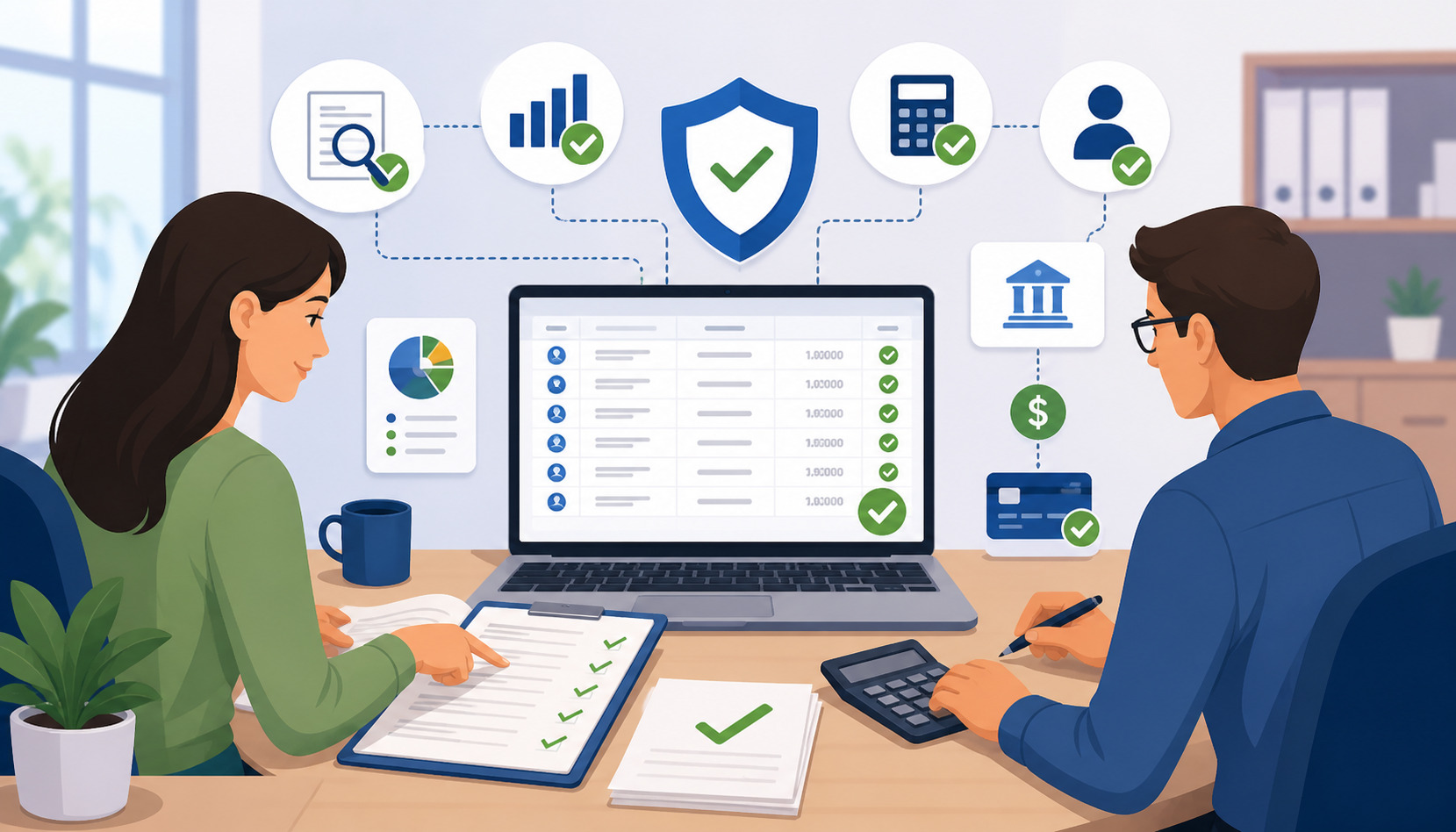
Consignor payment accuracy is one of the most important trust builders in a consignment business. When consignors hand over merchandise, they expect accurate commission calculations, clear payout timing, reliable item-level tracking, and reports that show exactly how their money was earned.
Even small payment mistakes can lead to disputes. A missed return, wrong commission rate, untracked discount, duplicate consignor profile, or inaccurate account balance can make a consignor question the entire process. That is why Reducing Errors in Consignor Payments is not just an accounting task. It is an operational priority.
A strong process protects your store, your staff, and your consignor relationships. It also helps resale shops, boutique retailers, thrift stores, and inventory managers spend less time fixing payout issues and more time selling merchandise.
Why Consignor Payment Errors Happen
Consignor payment mistakes usually happen when sales, inventory, agreements, and payout records are not fully connected. Many stores start with simple spreadsheets or handwritten notes, which may work at first. But as inventory grows, manual tracking becomes harder to control.
Common causes include manual calculations, unclear agreements, mislabeled inventory, incorrect commission rates, missed returns, untracked discounts, and delayed updates. A staff member may apply the wrong markdown rule. Another may enter an item under the wrong consignor profile. A refund may be processed after a payout has already been issued.
Payment errors also happen when stores do not have a formal review step before payouts are approved. Without a payout reconciliation process, staff may not catch duplicate records, unpaid balances, payout holds, or adjustments that should reduce the final amount.
Common Consignment Payout Errors to Watch For
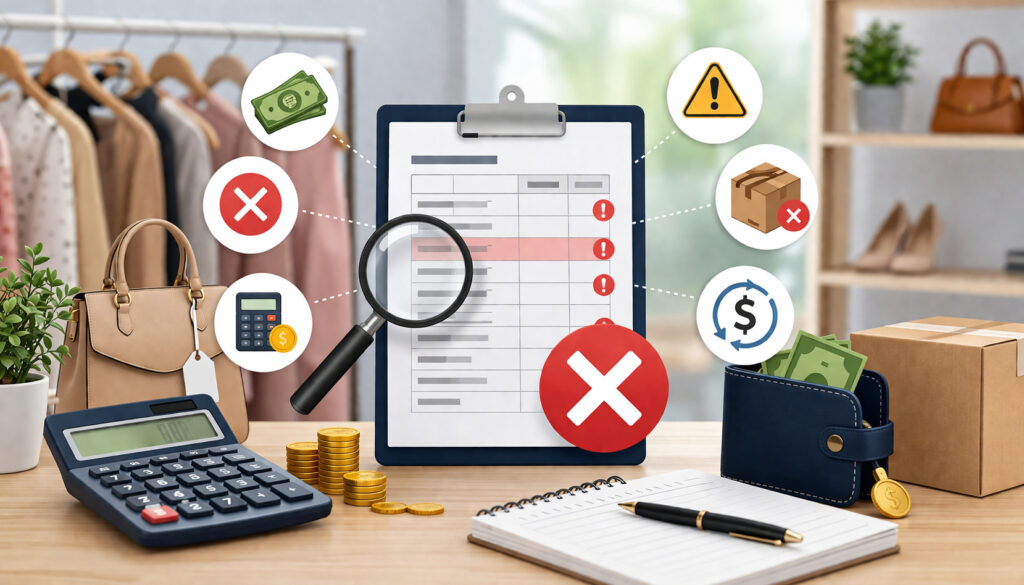
Consignment payout errors usually fall into predictable categories. The most common issues involve wrong commission calculations, incorrect consignor assignment, missed returns, undocumented fees, and inaccurate balances. These errors are preventable when stores standardize how they collect data and review payouts.
| Payment Error | Why It Happens | How to Prevent It |
| Incorrect commission amount | Wrong rate, tier, category, or markdown rule applied | Use stored commission rules and review payout reports |
| Payment sent to wrong consignor | Item linked to duplicate or incorrect profile | Use unique item IDs, barcodes, and verified consignor records |
| Return not deducted | Refund processed after payout review | Use payout holds until return windows close |
| Discount not reflected | Manual markdown not connected to payout calculation | Track discounts at item level |
| Duplicate payout | Same sale included in multiple payout batches | Use payout status tracking and unique payment IDs |
| Fee not deducted | Cleaning, listing, or processing fee missed | Define fees in agreements and automate deductions |
| Balance mismatch | Sales, returns, and payments not reconciled | Reconcile account balances before payout approval |
Incorrect Commission Calculations
Consignor commission errors are among the most common payment issues. They often happen when stores use different payout rules for different categories, price ranges, brands, or sale timing. For example, luxury items may have a different split than furniture, apparel, or accessories.
Tiered rates can also create confusion. A store may pay one percentage on items under a certain price and another percentage on higher-value items. If staff calculate those rules manually, mistakes are easy to make.
Discounts and markdowns add another layer. If an item was originally priced at 100 but sold at 75 after a markdown, the commission should follow the agreement’s rules. Some stores calculate commission on the final sale price, while others may have special rules for markdown events.
Paying the Wrong Consignor
Paying the wrong consignor usually starts with an intake or labeling problem. If an item is entered manually with a vague description, assigned to a duplicate profile, or sold without a barcode scan, the payout may go to the wrong account.
This is especially risky in stores that accept many similar items. Two consignors may bring in similar jackets, handbags, books, lamps, or children’s items. Without a unique item ID, staff may rely on memory or visual descriptions, which can lead to errors.
Duplicate consignor profiles are another common problem. If “Sarah J.” and “Sarah Johnson” are the same person but both profiles are active, sales and payouts may be split across records.
Paying Before Returns or Adjustments Are Final
Many consignment payout mistakes happen because stores pay too quickly. A sale may look complete, but a return window, chargeback review, damaged item claim, or refund request may still be open.
If a consignor is paid before a return is final, the store may need to recover the money later. That can create uncomfortable conversations and messy account adjustments. Payout holds help prevent this.
Adjustments should also be reviewed before payment. These may include repair fees, cleaning fees, authentication costs, restocking fees, or agreed deductions. If they are missed, the payout amount will be inaccurate.
How to Prevent Consignor Payout Mistakes

The best consignor payment errors solutions combine clear policies, consistent data entry, item-level tracking, automated commission rules, and a payout review process. The goal is to prevent problems before money is issued.
Start by documenting how payouts work. Every consignor should understand rates, fees, return rules, markdowns, payment timing, and how disputes are handled. Staff should follow the same process every time.
Next, track each item from intake to payout. A strong workflow should show who owns the item, when it arrived, what it sold for, whether a discount applied, whether it was returned, and whether the consignor has been paid.
For stores ready to move beyond spreadsheets, a consignment POS system can connect inventory, sales, reports, and payouts in one workflow.
Use Clear Consignor Agreements
Clear agreements are one of the strongest ways to prevent consignor payout mistakes. A good agreement explains how commissions are calculated, when payments are issued, how markdowns work, and what happens if an item is returned.
The agreement should also define fees. These may include intake fees, cleaning fees, repair fees, authentication fees, listing fees, or payment processing deductions. If fees affect consignor balances, they should be documented before the item is accepted.
Include payment methods and payout schedules as well. Consignors should know whether they will be paid by check, store credit, electronic transfer, or another method. They should also know when payouts are processed and whether minimum payout thresholds apply.
Track Every Item With a Unique ID
Unique item tracking is essential for consignor payment accuracy. Every item should have its own ID, barcode, or label that connects it to the correct consignor account. This helps staff track the item through intake, pricing, markdowns, sale, return, and payout.
Barcodes reduce manual entry errors at checkout. They also make it easier to confirm that the item sold is the same item entered at intake. This is especially helpful for stores with high inventory turnover.
Detailed descriptions also matter. Include brand, size, color, condition, category, price, and any special notes. The more complete the record, the easier it is to resolve questions later. For deeper inventory workflow guidance, see this resource on tracking consignor inventory and sales.
Review Payout Reports Before Issuing Payments
Payout reports should be reviewed before money is sent. A strong payout report gives staff a clear view of sold items, sale dates, selling prices, discounts, fees, commission rates, returns, adjustments, and final account balances.
The review should confirm that each sale is eligible for payout. Staff should check whether the return window has closed, whether any refund is pending, and whether the item was paid in a previous batch.
A good report also helps answer consignor questions. If a consignor asks why a payout is lower than expected, staff can point to item-level details instead of guessing.
How a Consignor Payment Management System Improves Accuracy
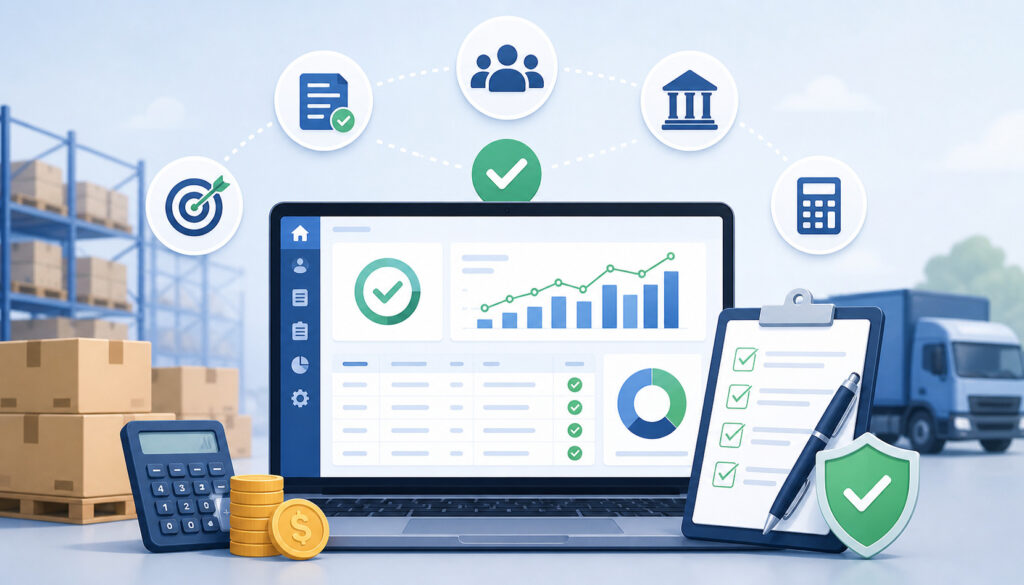
A consignor payment management system reduces manual work by linking inventory, sales, commission rules, payout schedules, account balances, payment records, and reports. Instead of calculating payouts from separate spreadsheets, staff can rely on connected records.
This improves accuracy because each sale is tied to a specific item and consignor. When an item sells, the system can apply the correct commission rule, deduct approved fees, update the consignor account balance, and include the sale in the correct payout cycle.
A system also helps with reporting. Stores can generate payout reports, view balances, and track payment history without rebuilding the data each time. This supports better consignment payment tracking and fewer disputes.
For stores comparing payout workflows, this guide on how POS systems calculate consignor payouts explains how commissions, discounts, returns, and fees can flow through a connected system.
Automated Commission Rules
Automated commission rules help prevent inconsistent calculations. Once the rules are entered, the system applies payout percentages, tiered rates, category rules, fees, and deductions the same way each time.
This is useful for stores with multiple consignor types. For example, VIP consignors, high-volume sellers, furniture consignors, or luxury consignors may have different payout terms. Automation reduces the risk of staff applying the wrong rule.
Automation also helps with discounts. If markdowns are tracked in the system, the payout can be calculated from the correct selling price instead of the original price.
Real-Time Consignor Account Balances
Real-time consignor account balances help staff answer questions quickly and accurately. Instead of saying, “We need to check,” staff can see sold items, pending items, payout holds, adjustments, and available balances.
This transparency reduces disputes. Consignors are more likely to trust the process when balances are updated consistently and supported by item-level records.
Real-time balances also help stores avoid overpayments. If a return, fee, or correction changes the balance, the system should reflect that before the next payout is issued.
Audit Trails and Payment History
Audit trails show what changed, when it changed, and who made the change. This matters because payout issues often involve edits, refunds, voids, returns, commission changes, or manual adjustments.
Payment history also protects the store. Staff can confirm when a payout was issued, what it included, and whether the consignor already received funds. This is especially important when handling payout disputes.
A strong audit trail should include:
- Sale records
- Return records
- Commission rule versions
- Manual adjustments
- Payout approvals
- Payment dates
- Staff edits
- Report history
Best Practices for Payout Reconciliation
Payout reconciliation is the process of confirming that sales, returns, discounts, fees, account balances, and issued payments all match before a payout cycle is closed. It is one of the most important safeguards for reducing errors in consignor payments.
Start with sales. Confirm that all sold items in the payout period are assigned to the correct consignor and that each sale has a final status. Then review discounts and markdowns to ensure the correct net sale amount is used.
Next, check returns and refunds. Any returned item should be removed from the payout batch or adjusted according to store policy. If the item was already paid out, the adjustment should be clearly recorded in the consignor account.
Then review fees and deductions. Cleaning fees, listing fees, repair costs, authentication charges, or payment fees should match the agreement. Do not deduct fees that were not documented.
Finally, compare the payout report to issued payments. Each payment should have a unique reference, date, amount, and status. If possible, match payout records to bank or payment processor records.
Staff Training Tips for Consignor Payment Accuracy
Staff training is essential because many payout errors begin long before the payout report is created. Intake, labeling, pricing, discounting, returns, and checkout all affect consignor payment accuracy.
Train staff to verify consignor profiles before accepting items. They should confirm names, contact details, payout preferences, and agreement terms. If a consignor already exists, staff should avoid creating a duplicate profile.
Labeling should be consistent. Every item should receive the correct barcode or unique ID before it reaches the sales floor. Staff should understand that missing labels can lead to wrong payouts.
Train employees on commission rules and markdown policies. Even if software handles the math, staff need to understand how the rules work so they can explain payouts and identify unusual results.
Return handling is another key area. Staff should know whether returns reopen inventory, reduce consignor balances, trigger payout holds, or require manager approval.
Common Mistakes to Avoid
Many stores make payout mistakes because they rely on processes that worked when the business was smaller. As volume grows, informal systems become risky.
One common mistake is relying only on spreadsheets. Spreadsheets can be useful for summaries, but they are easy to edit, duplicate, mis-sort, or disconnect from sales records. If a formula breaks, the payout may be wrong.
Another mistake is skipping payout review. Even automated systems need human oversight. Staff should check unusual payouts, negative balances, duplicate records, returns, and manual adjustments before approval.
Changing commission terms informally is also risky. If a manager promises a special rate but does not update the agreement or system record, the payout may be disputed later.
Other mistakes include:
- Paying before return windows close
- Failing to document discounts
- Not recording fees clearly
- Allowing too many users to edit payouts
- Ignoring duplicate consignor profiles
- Not communicating payout policies
- Sending reports without item-level details
- Closing payout cycles without reconciliation
FAQs
What causes consignor payment errors?
Consignor payment errors are usually caused by manual calculations, unclear agreements, wrong commission rates, mislabeled inventory, duplicate consignor profiles, missed returns, undocumented discounts, or weak payout review processes.
How can stores prevent consignor payout mistakes?
Stores can prevent consignor payout mistakes by using written agreements, unique item IDs, barcode tracking, automated commission rules, payout holds, manager approval workflows, and regular reconciliation.
What should a payout report include?
A payout report should include sold items, sale dates, item IDs, selling prices, discounts, fees, commission rates, return status, adjustments, previous balances, new balances, payout amounts, and payment status.
Can software reduce consignment payout errors?
Yes. A consignment POS system can reduce consignment payout errors by connecting item ownership, sales, commission rules, returns, account balances, and payout reports.
How do returns affect consignor payments?
Returns can reduce or delay consignor payments. If an item is returned before payout, it should usually be removed from the payout batch. If the consignor was already paid, the store may need to adjust the consignor account balance according to the agreement.
Why are barcodes important for payout accuracy?
Barcodes help connect each sale to the correct item and consignor. They reduce manual entry mistakes, prevent confusion between similar items, and make it easier to track merchandise from intake through payout.
How often should payouts be reconciled?
Payouts should be reconciled before each payout cycle is closed. Stores with frequent payouts may reconcile weekly, while others may reconcile monthly. The key is to reconcile before issuing payments.
What is the best way to handle payout disputes?
The best way to handle payout disputes is to review the agreement, item record, sale record, discounts, fees, returns, payout report, and payment history. Staff should explain the calculation clearly and document any correction.
Conclusion
Reducing Errors in Consignor Payments requires more than careful math. It depends on clear agreements, accurate item tracking, consistent commission rules, payout holds, report reviews, reconciliation, staff training, and reliable payment systems.
When consignment store payouts are accurate, consignors feel respected and informed. Staff spend less time correcting mistakes, managers gain better control over cash flow, and the business runs with fewer disputes.
Better consignor payment accuracy protects trust, strengthens operations, and helps consignment stores grow with confidence.